How often do we miss visiting the cultural sites on our doorstep? The Rocks and Ruins group asked this question and decided to remedy it by visiting the wonderful castle that we all pass by on a daily or weekly basis and probably never give it a second thought.
Managed by English Heritage, we were able to visit as an adult educational group and had access to the
grounds, castle, exhibition, and shop. The group of 15 people were welcomed by a friendly volunteer who
also left us a box of interesting items found or photographed from the castle since medieval times.
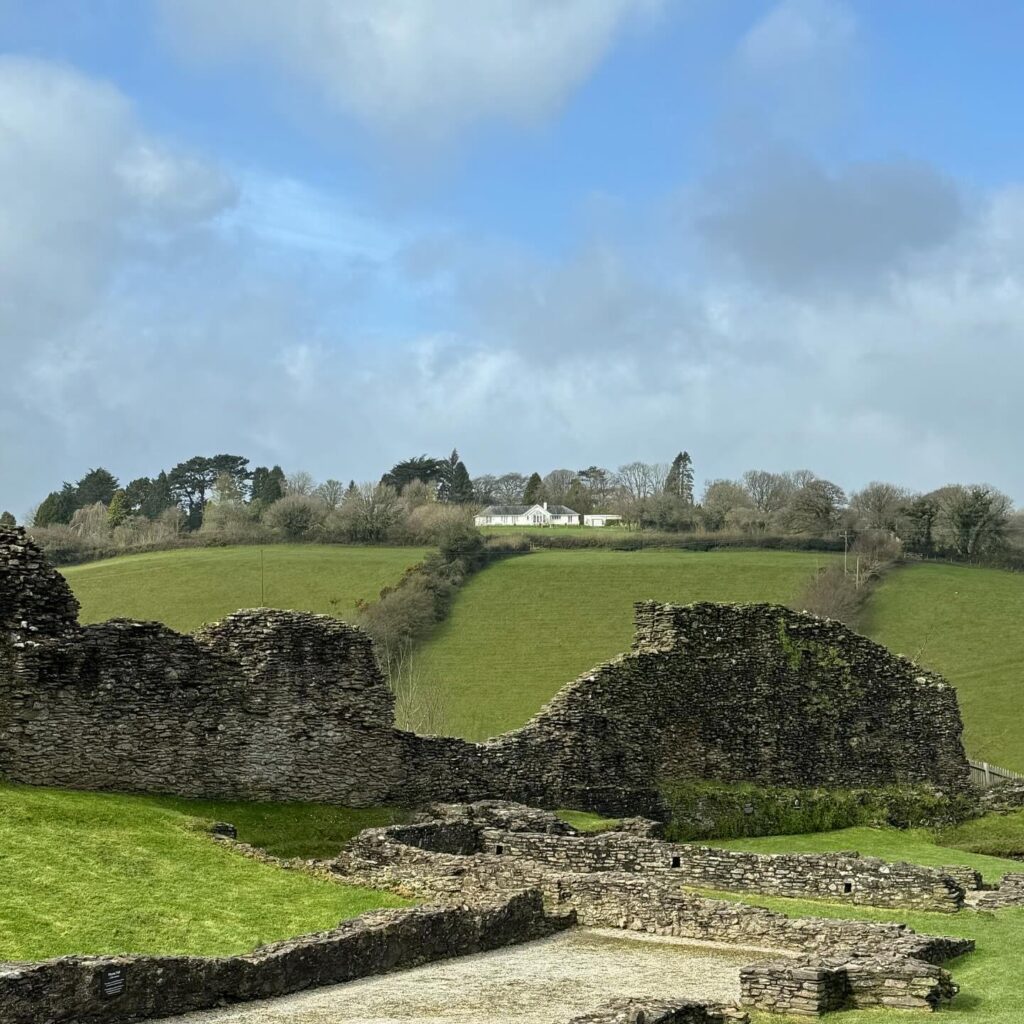
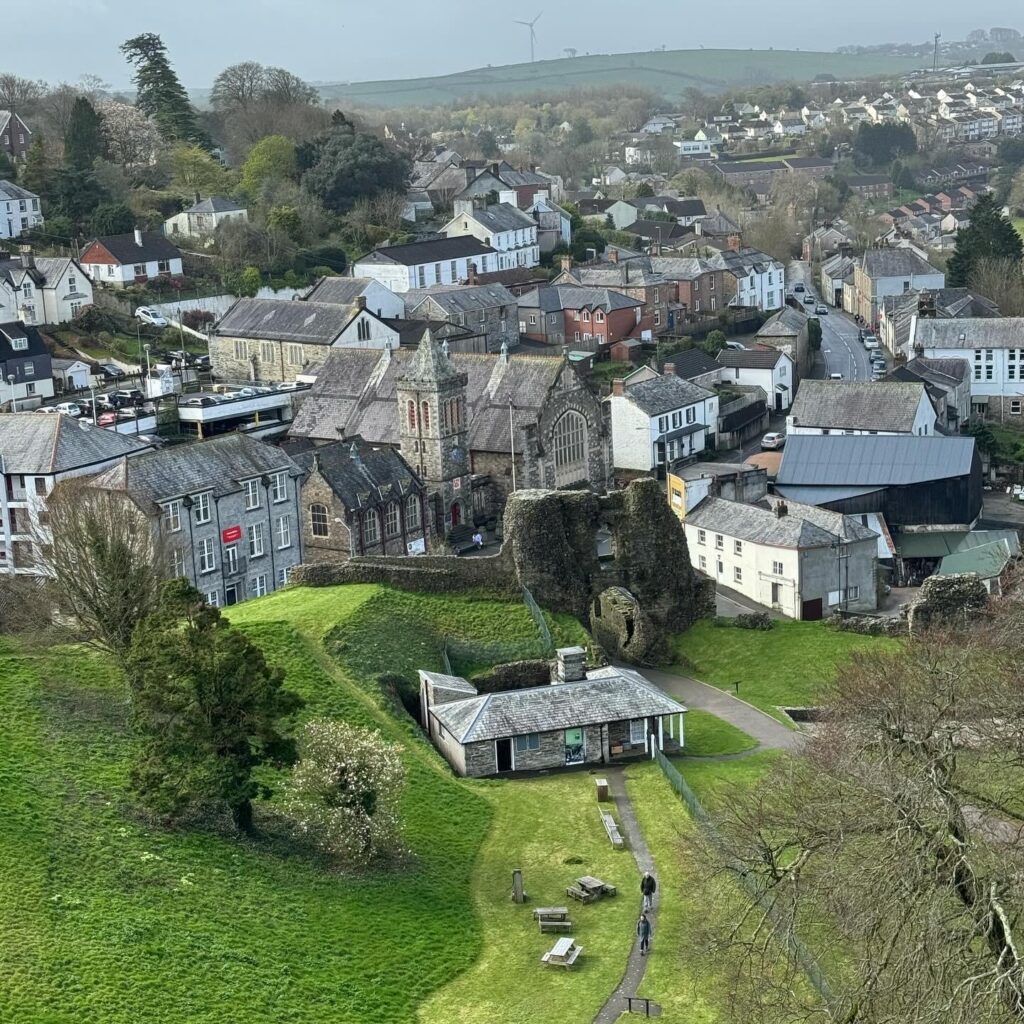
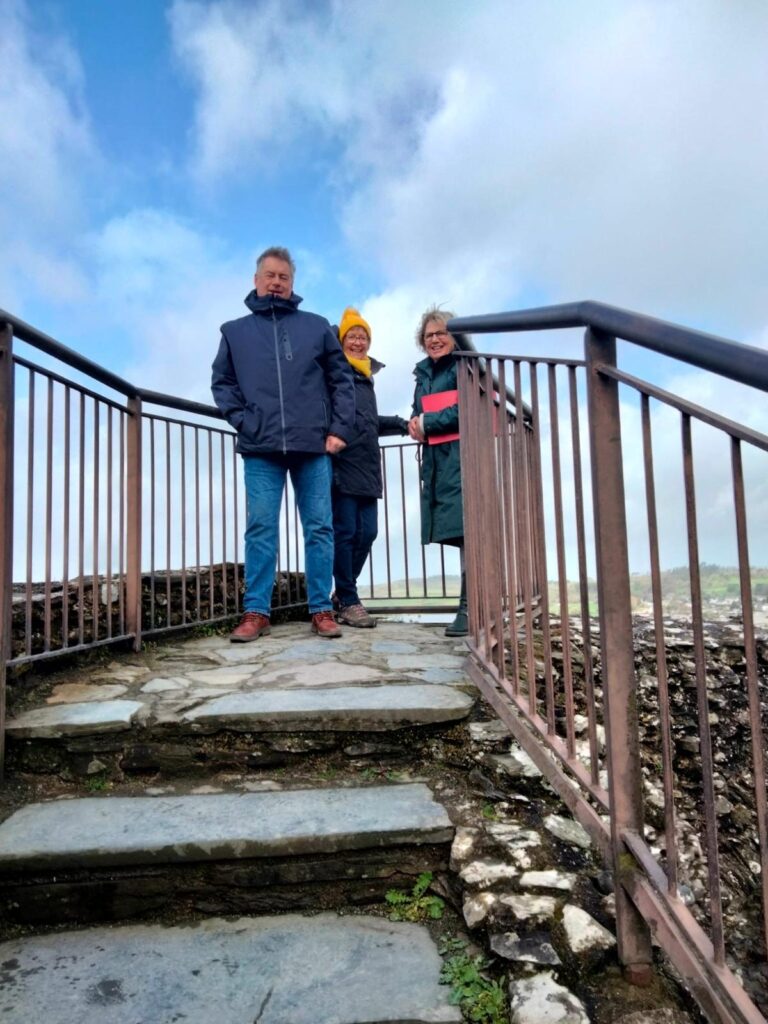
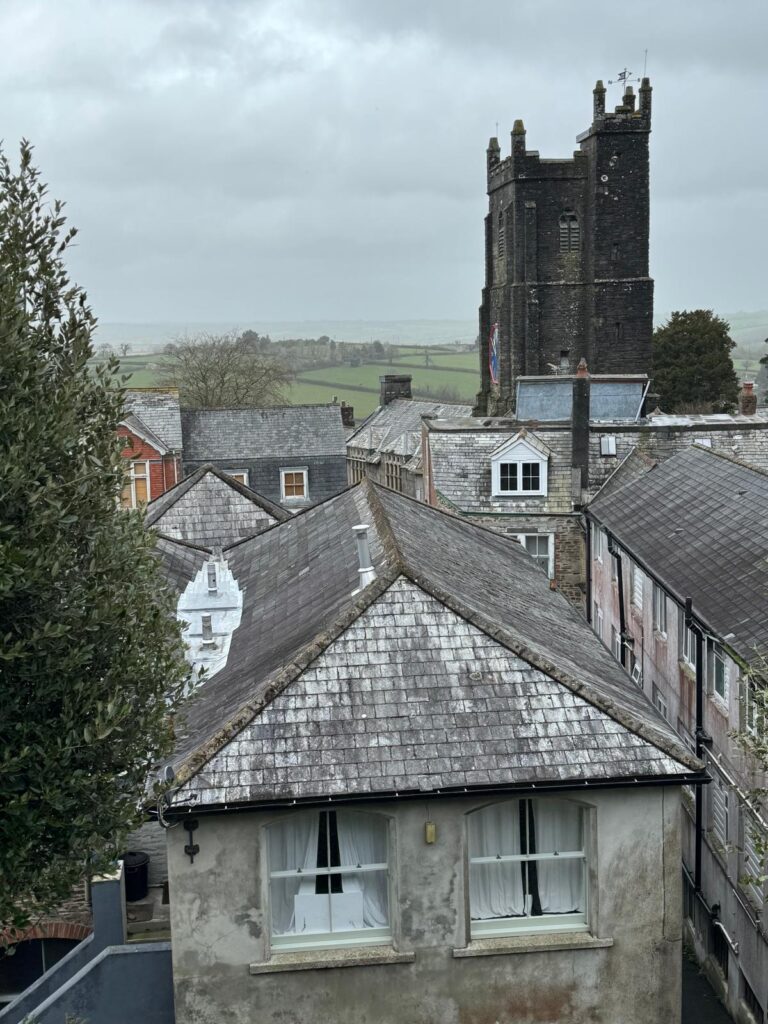
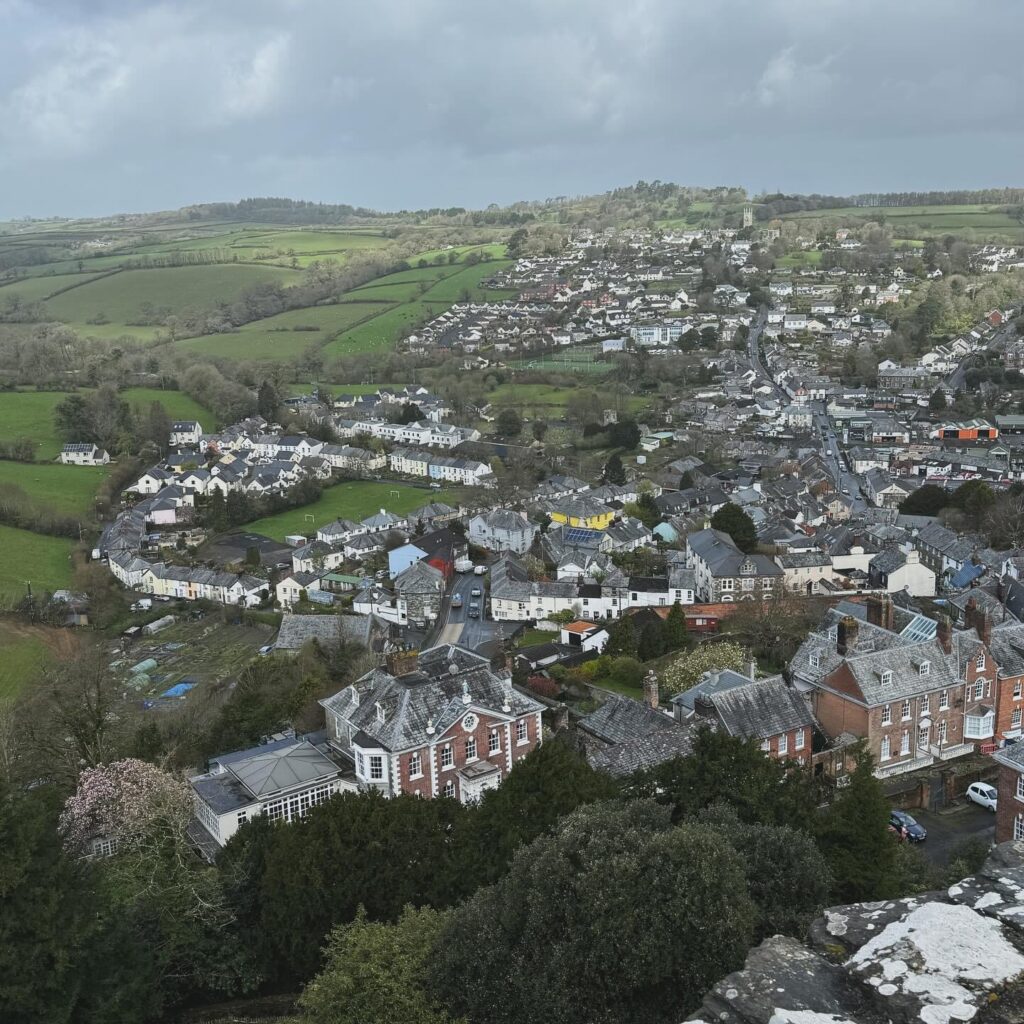
After learning of the castle’s history through a very well laid out exhibition, we climbed the 64 steps to the top of the keep and admired the incredible views over Launceston town and the surrounding countryside.
The English Heritage website gives this brief history of the castle:
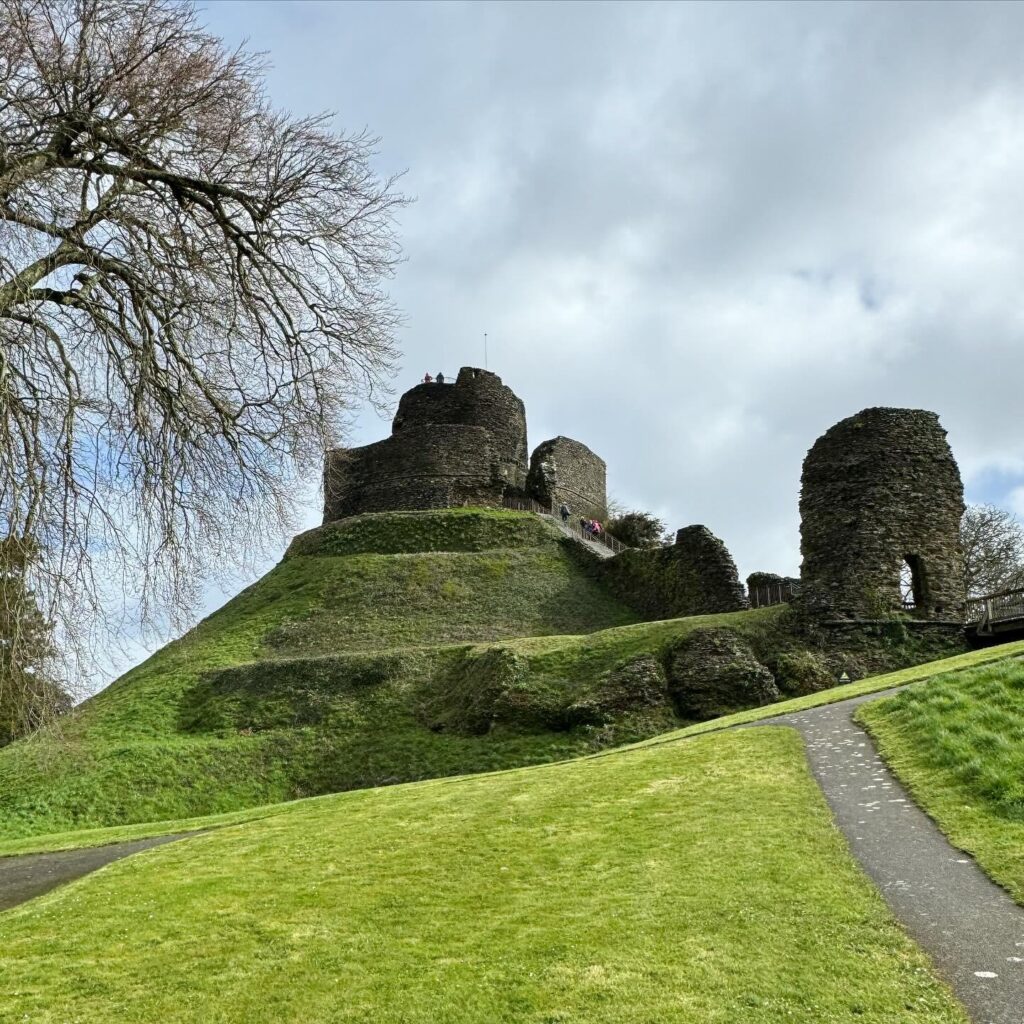
“Launceston Castle was built in a strategically important location; it provides a view for miles around and controlled the main road into Cornwall during the medieval period, which crossed the Tamar at Polson Bridge. The original castle was built in 1068 by Count Brian of Brittany, a close supporter of William I (r. 1066-1087). It was remodelled in the 1200s by Richard, Earl of Cornwall. Richard valued his Cornish estate because the local tin mining industry made him very wealthy. In 1272, his son Edmund, moved administrative matters from Launceston to Restormel Castle to be closer to the tin industry.
Built on a mound, and with a wall surrounding the castle grounds, Launceston Castle is an example of a motte and bailey castle. The Normans added height to the existing hill and the keep provided an additional vantage point from which to survey the area. Originally constructed from wood, Richard Earl of Cornwall rebuilt the castle from stone, adding a portcullis and thick gates to further strengthen the building.
Despite the castle being built with strong defences in mind, it has had a peaceful existence, only briefly facing conflict during the English Civil Wars.
For a long period in its history, Launceston Castle was courthouse and a prison. It had three cells for women prisoners and four cells for men. The conditions in the prison were notoriously damp and squalid, and one cell was nicknamed ‘doomsdale.’ Notable prisoners include the Quaker leader George Fox and the Catholic Priest Cuthbert Mayne, who was made a Saint in 1970. Launceston Castle stopped acting as a prison in the 1840s and was converted into a pleasure garden by the Duke of Northumberland, who owned it at the time.
During World War II, nissen huts were built in the grounds at Launceston Castle. These were field hospitals for the U.S. troops stationed in Cornwall as they trained for the D- Day landings.”
We spent some time identifying local landmarks from our high vantage position and were so pleased that the weather stayed fine (if a little breezy!) for our entire visit.
After spending just over an hour at the castle and grounds we took a short walk to the Eagle House Hotel, another historic Launceston building, built in 1764, and spent the next hour enjoying cohee and homemade cakes in the beautiful conservatory.
We all agreed that we were lucky to live in such an historic town and appreciated the time we had spent admiring it together, thanks to the u3a!